

John J. Gredler Works of Art
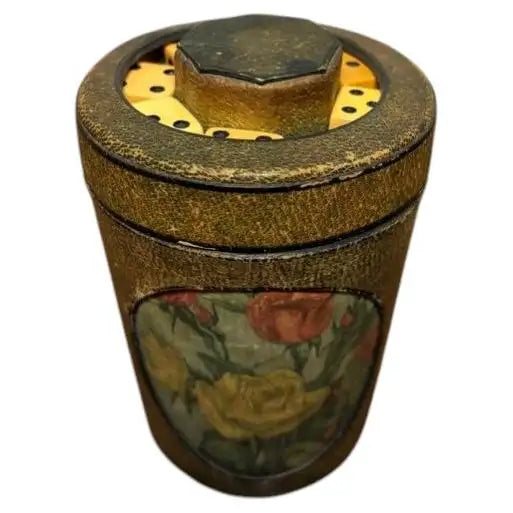
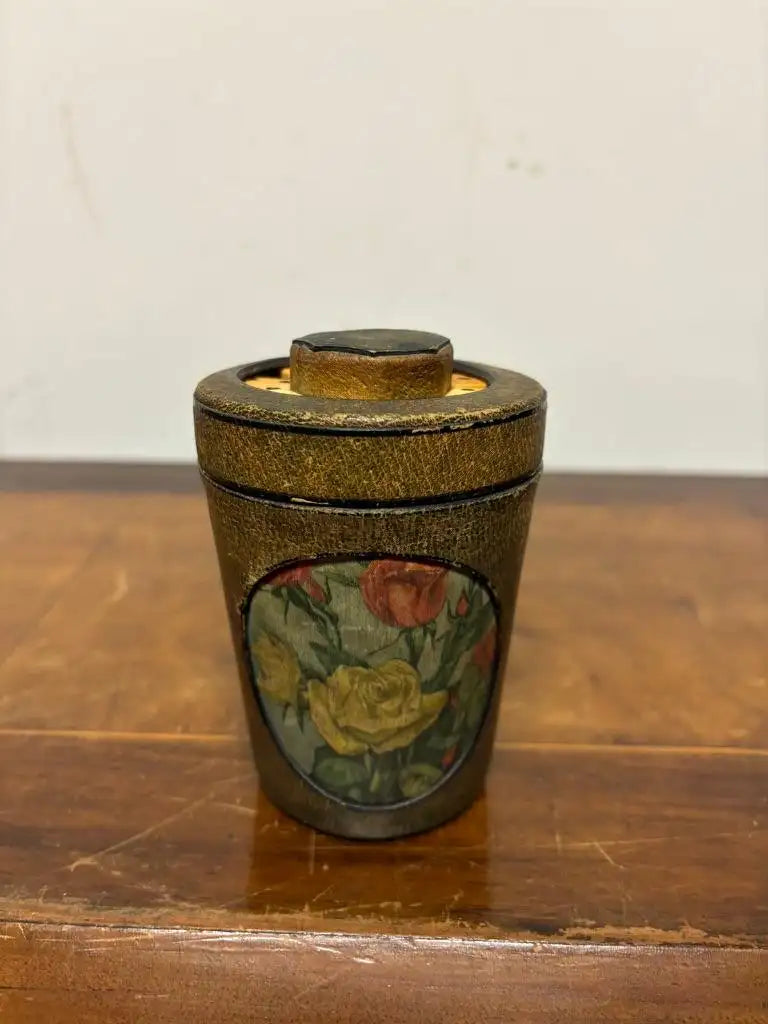
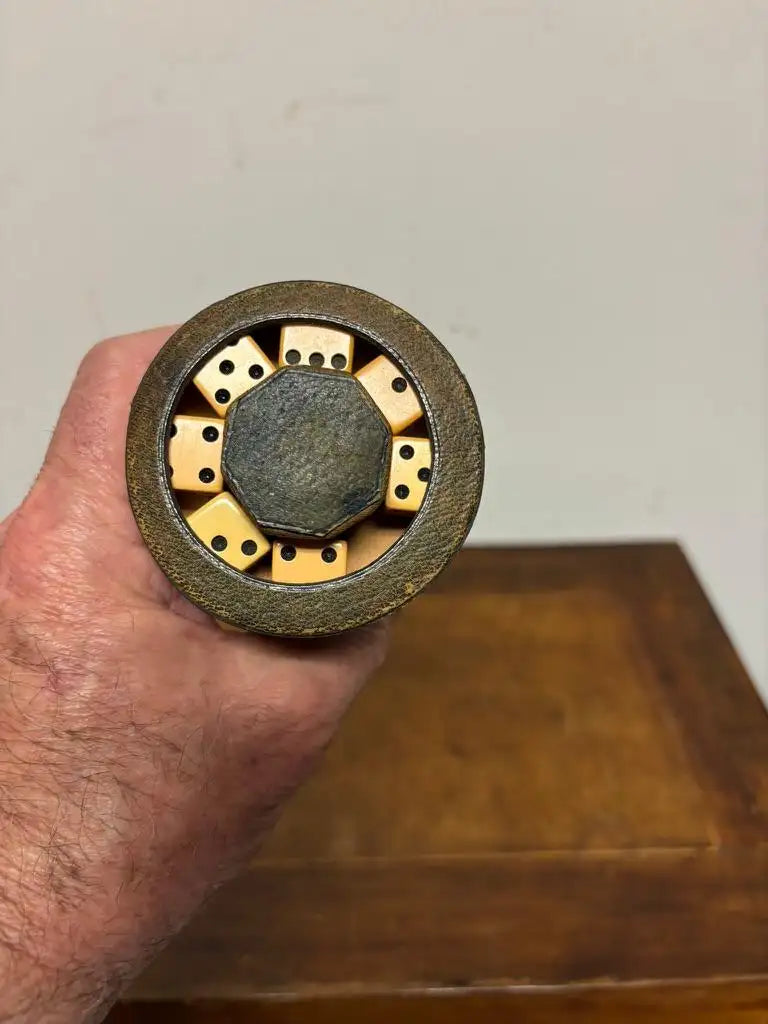
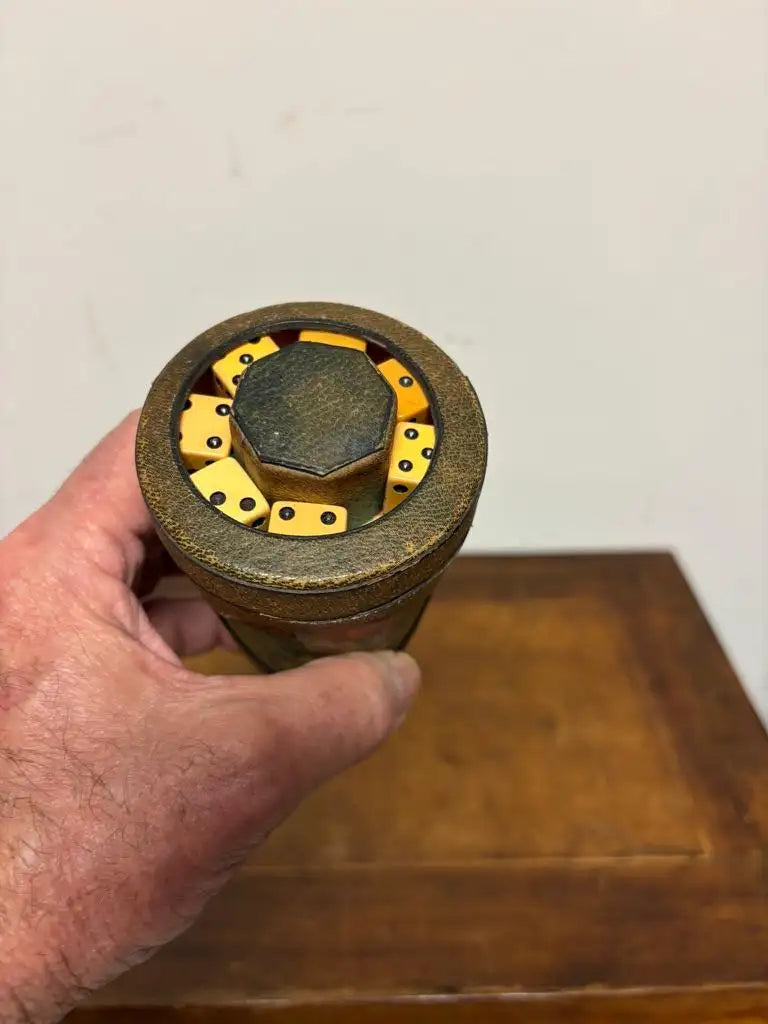
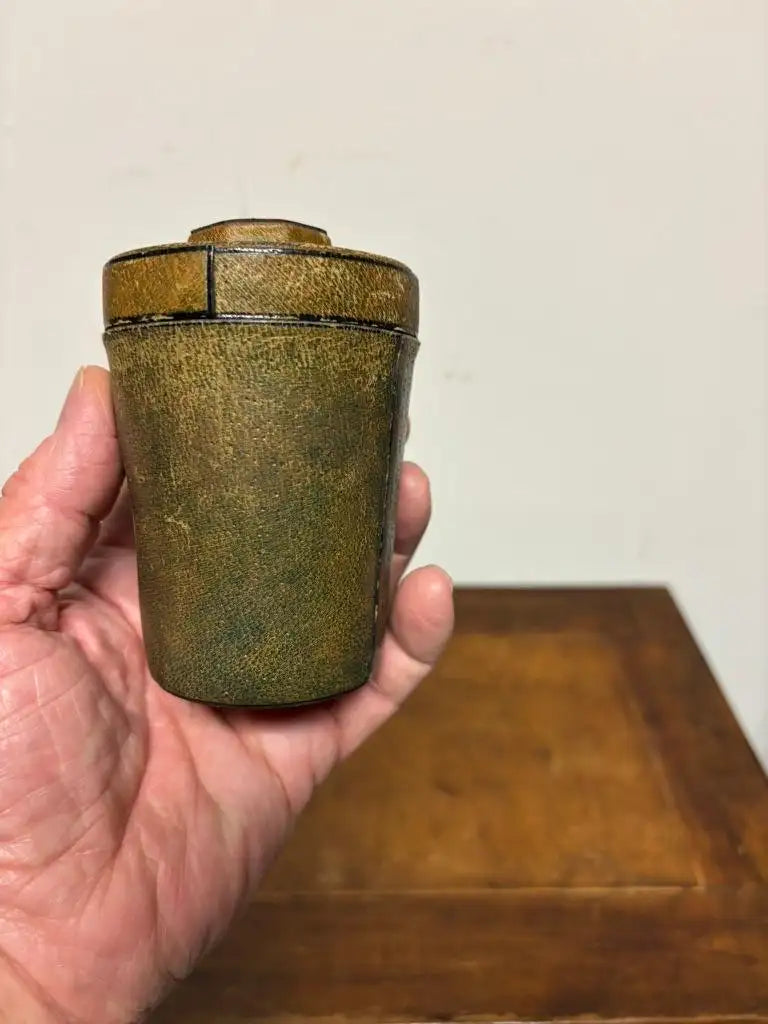
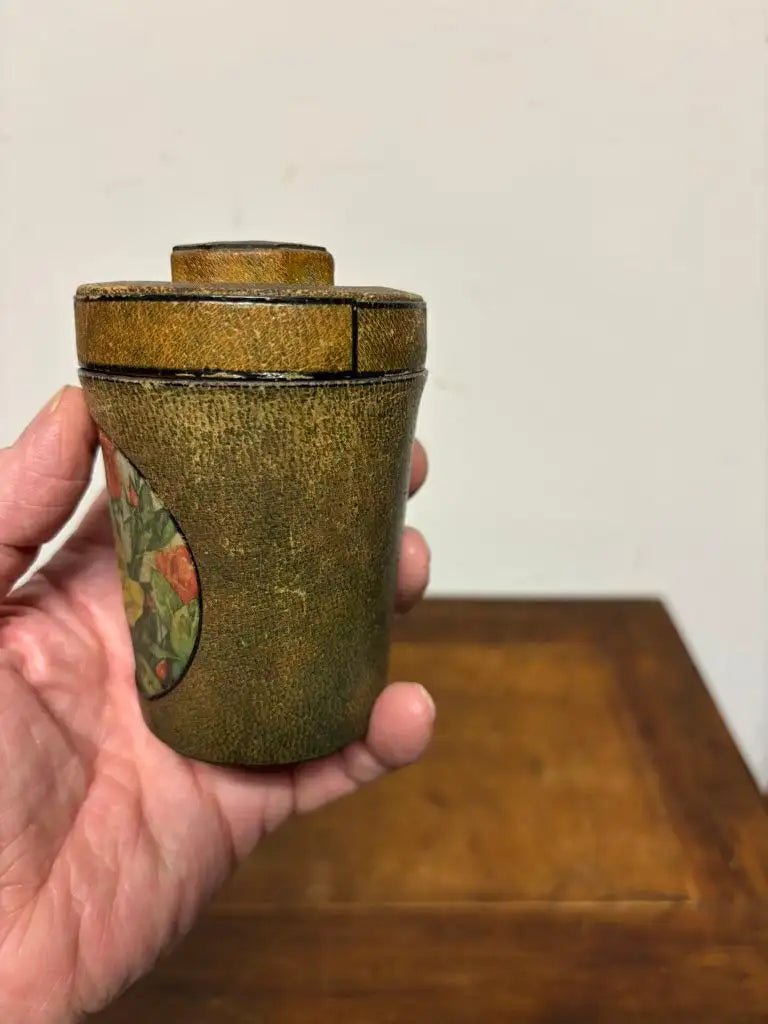
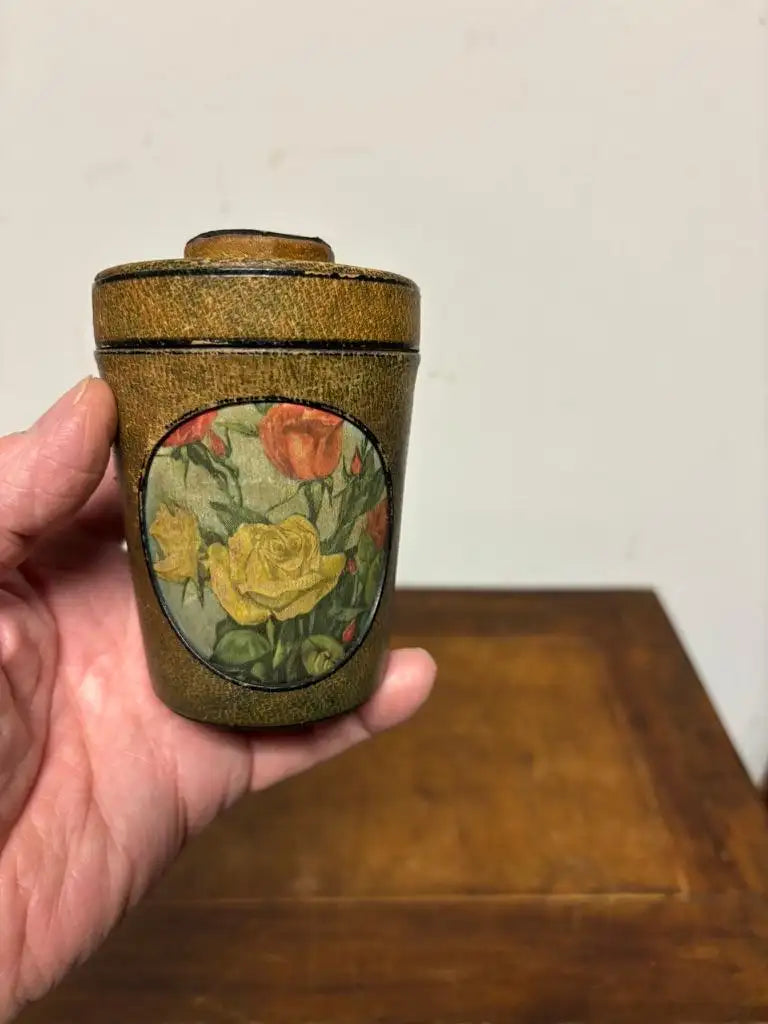
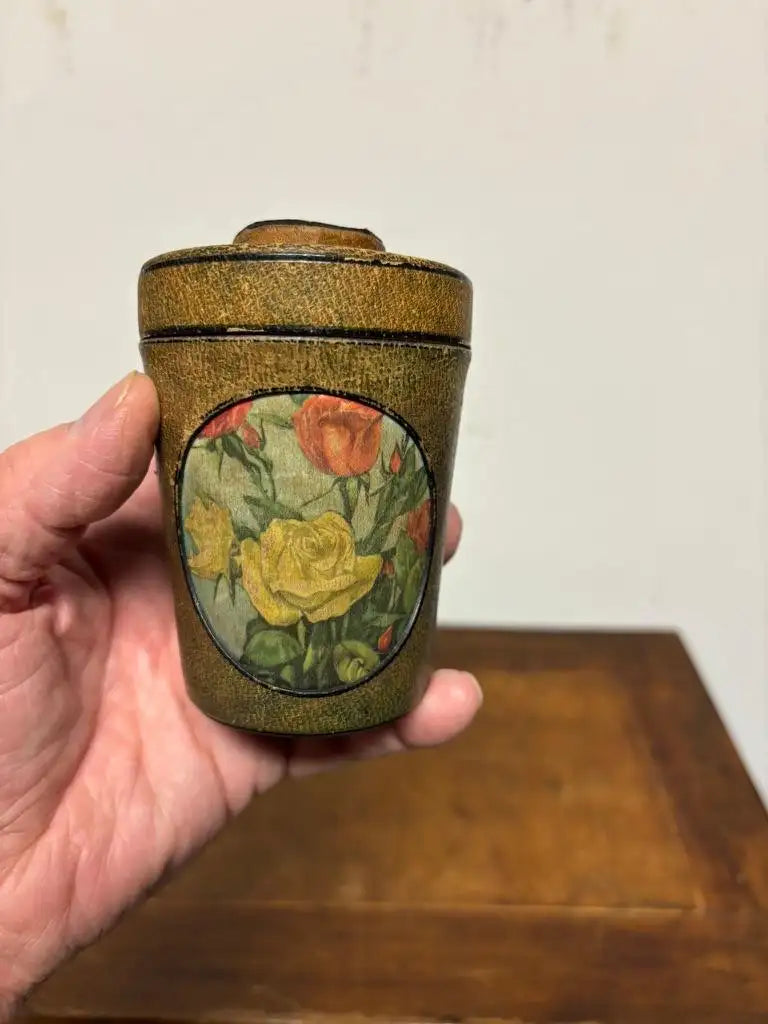
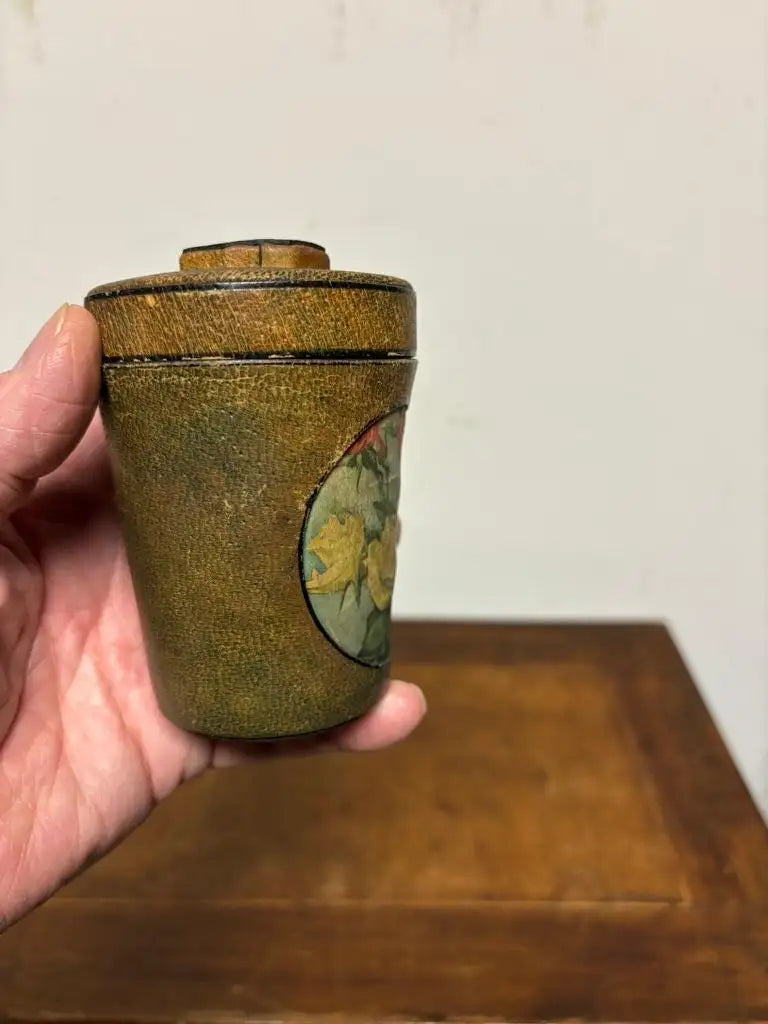
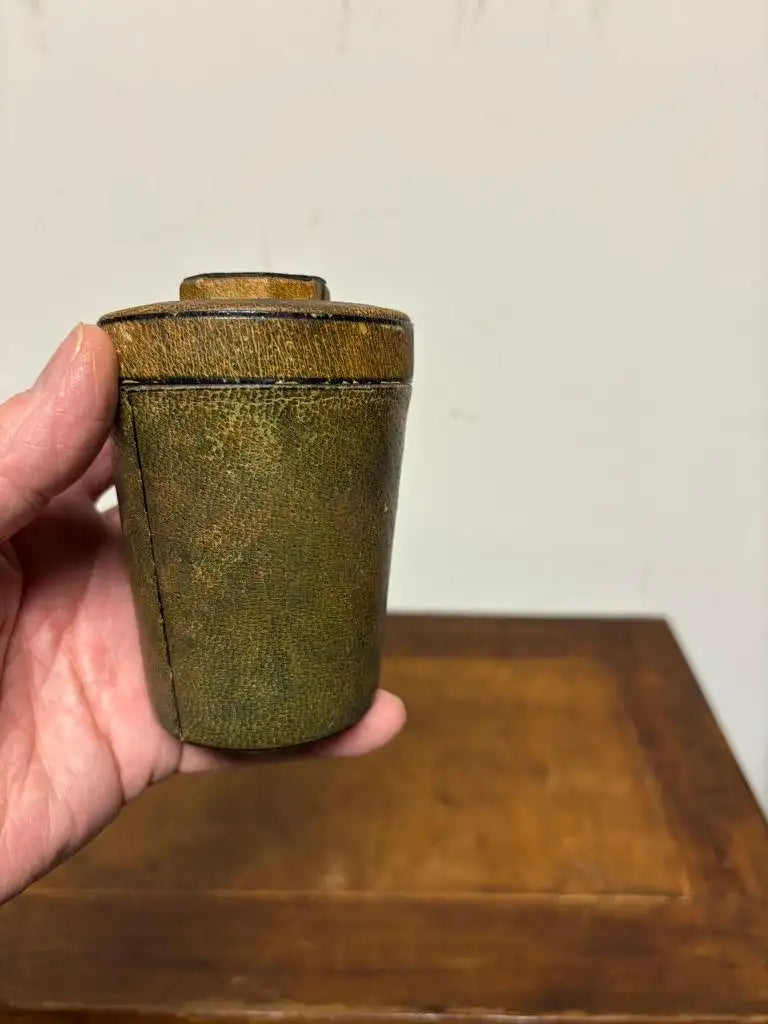
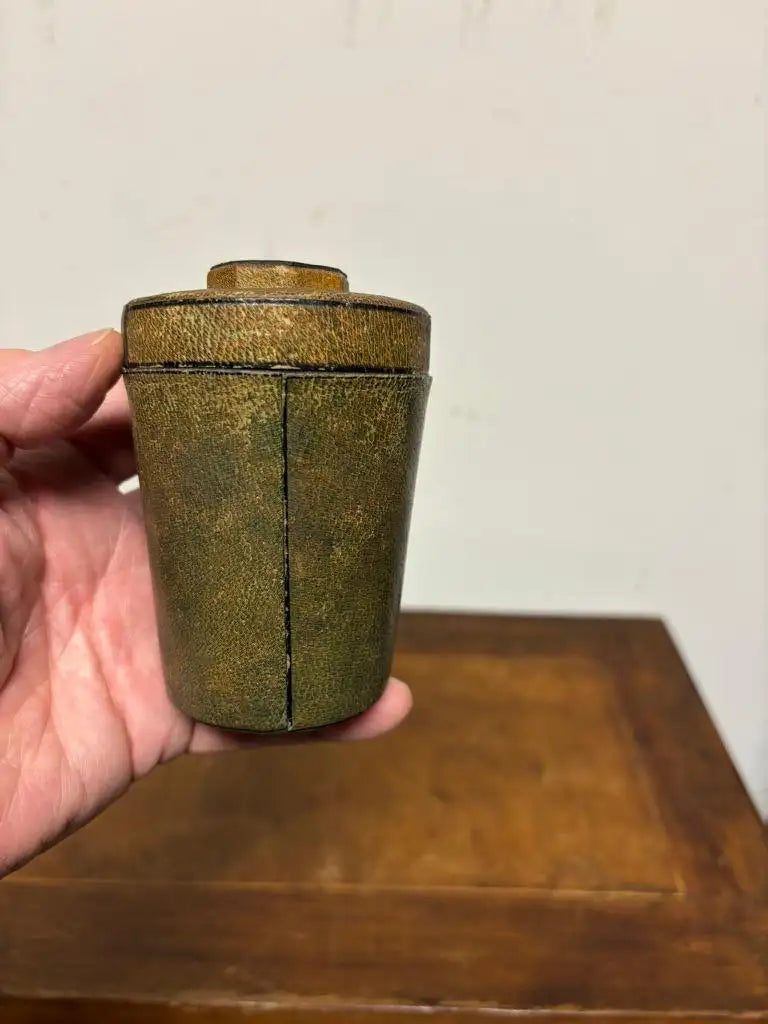
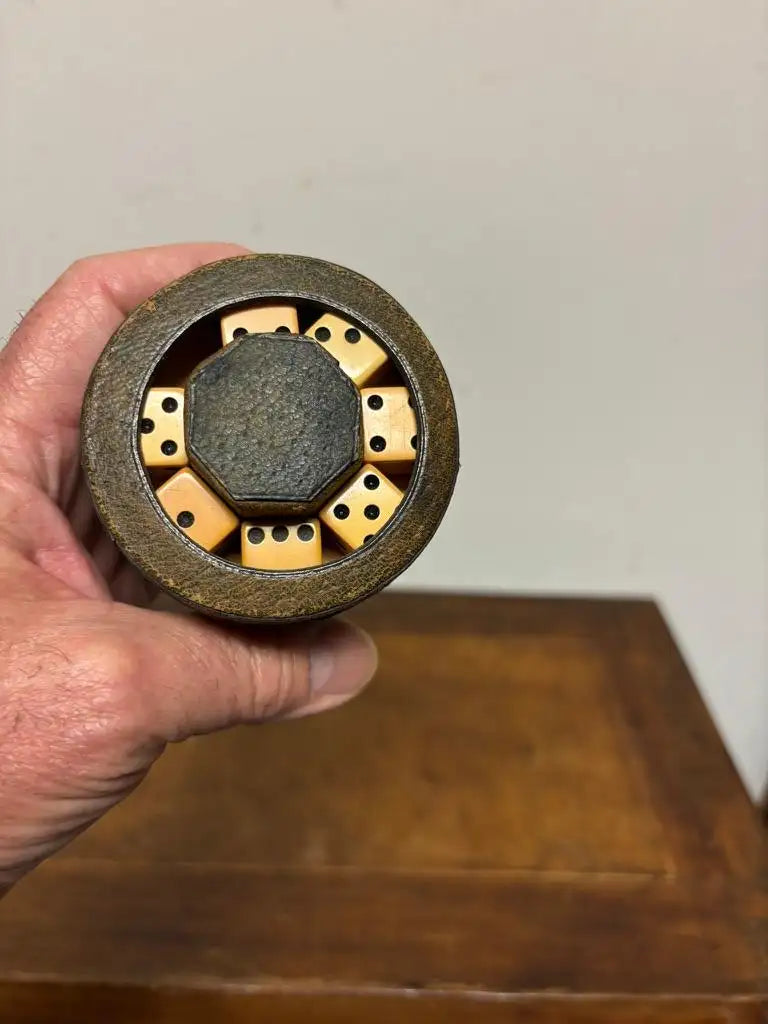
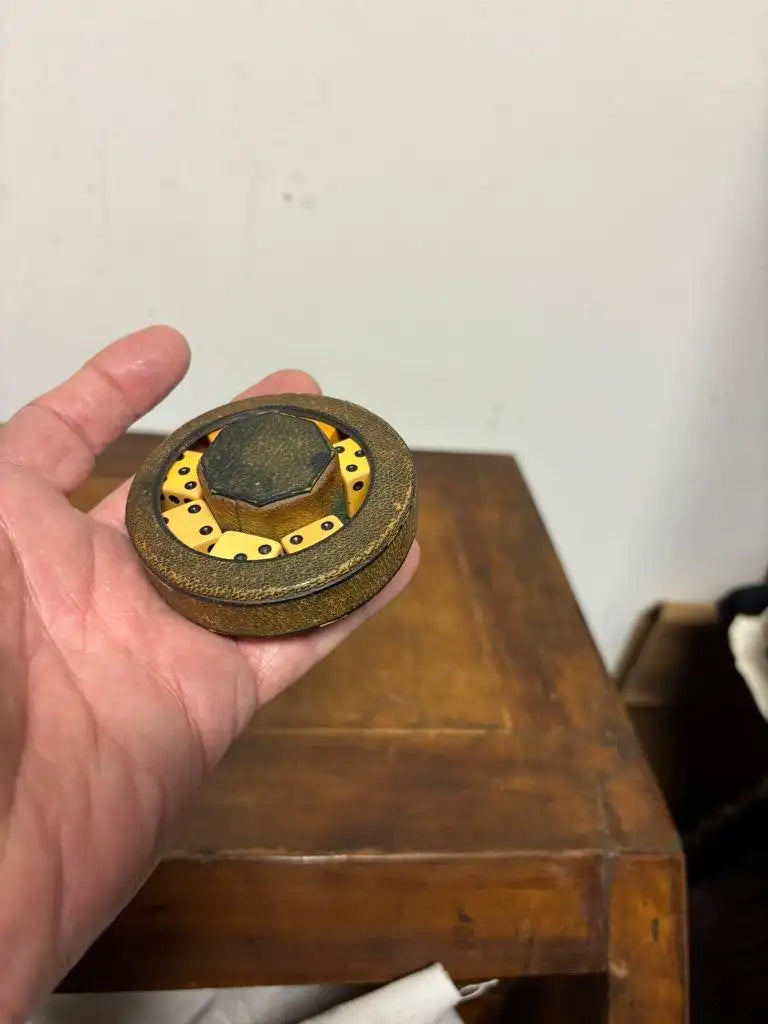
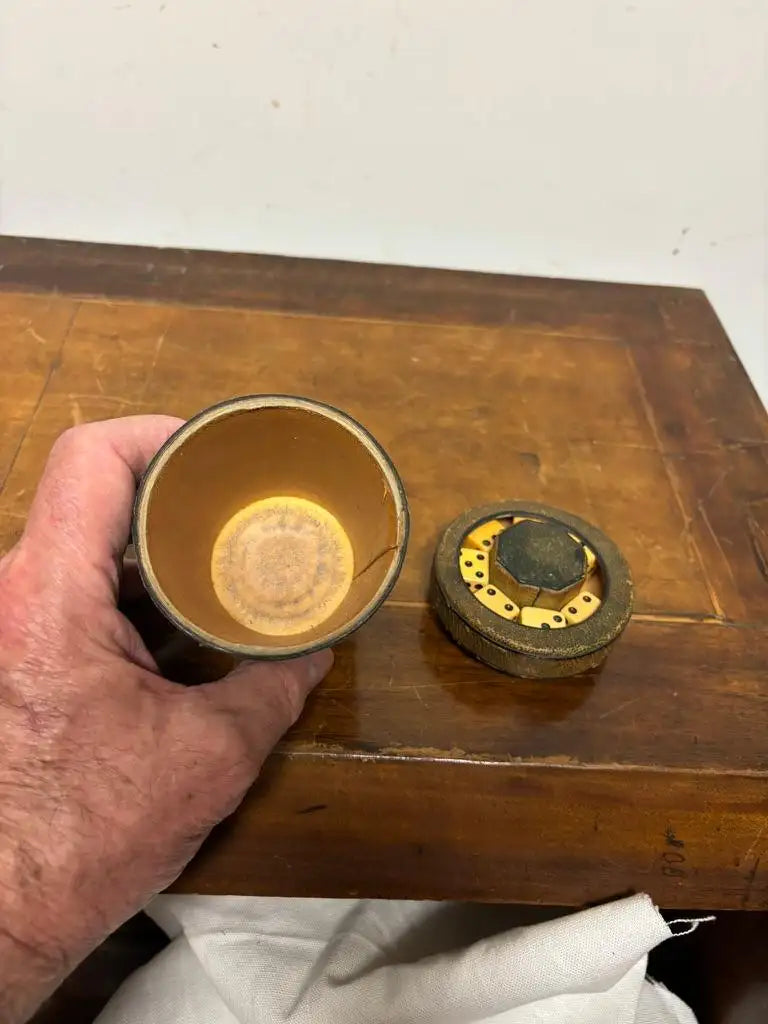
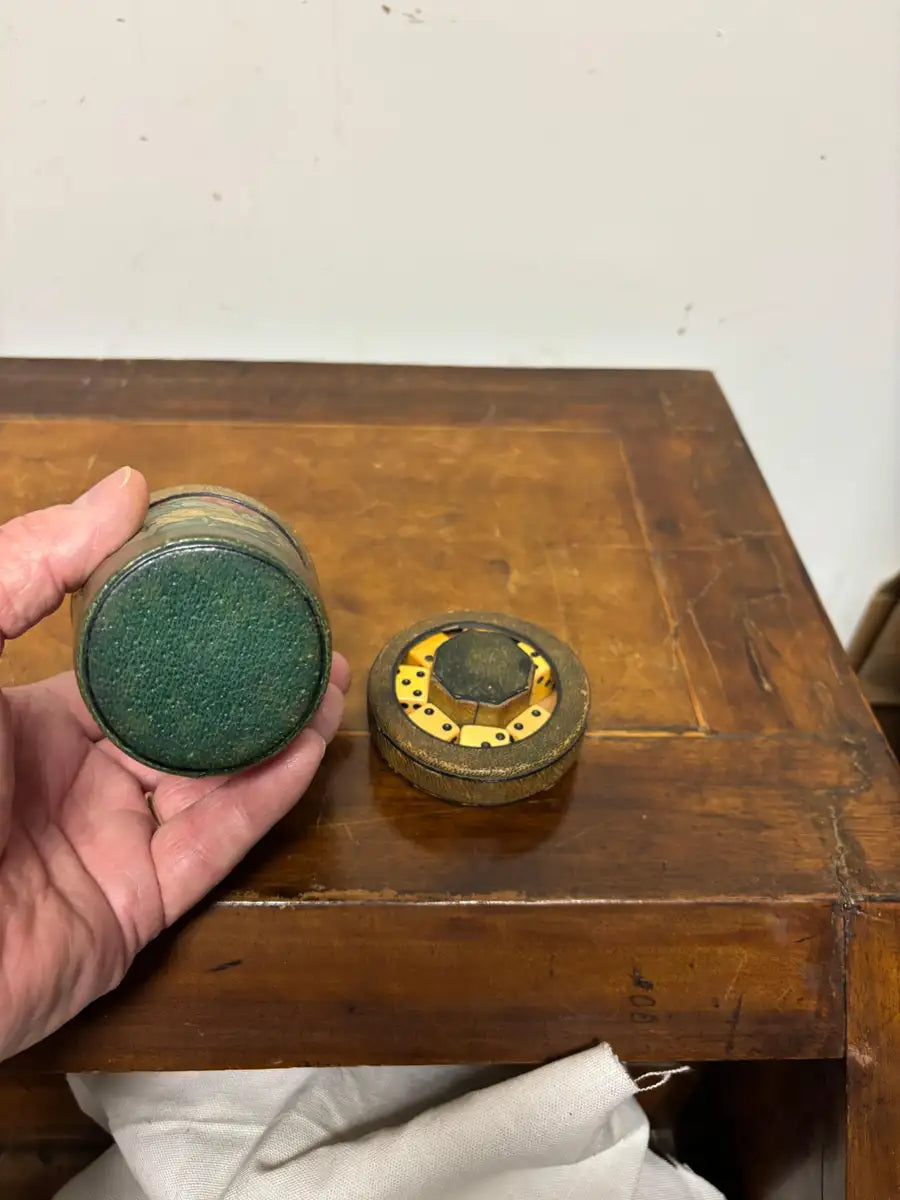
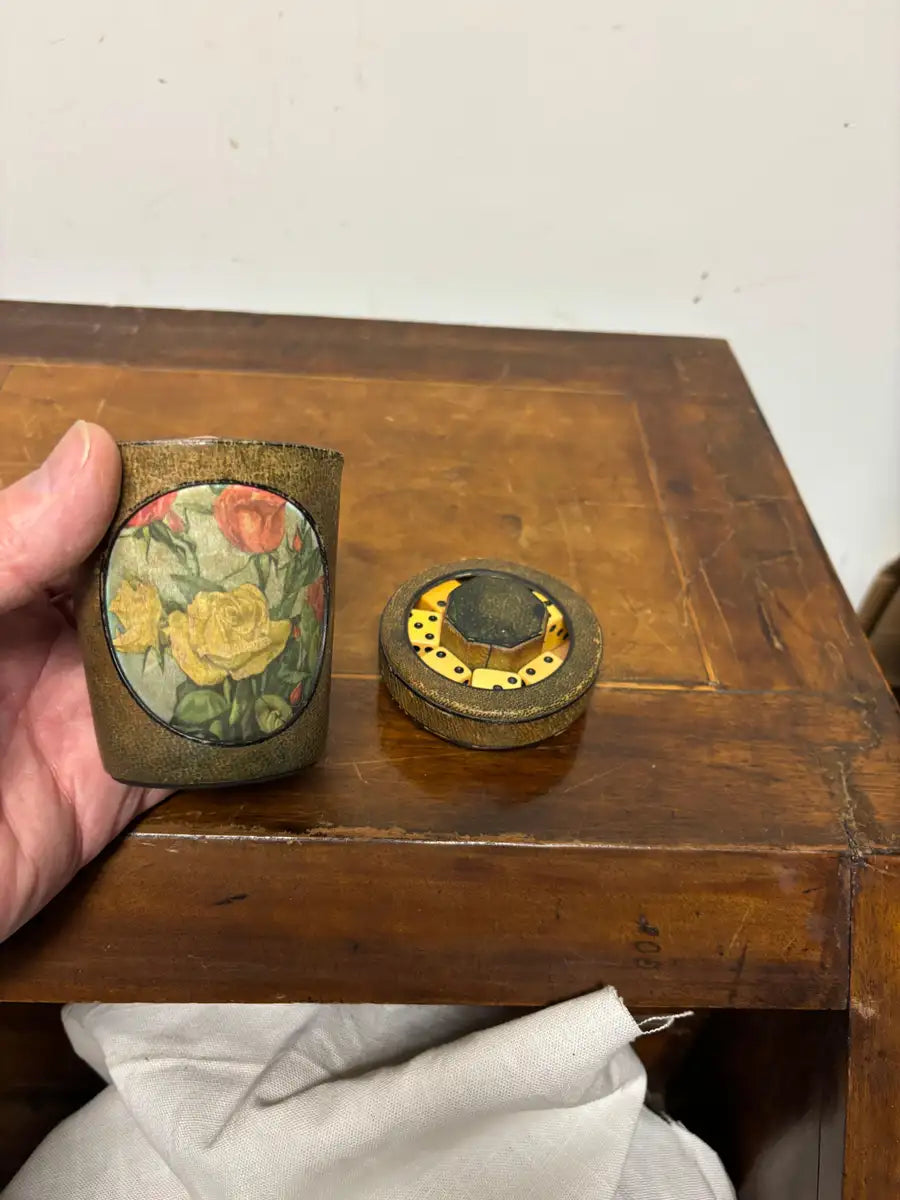
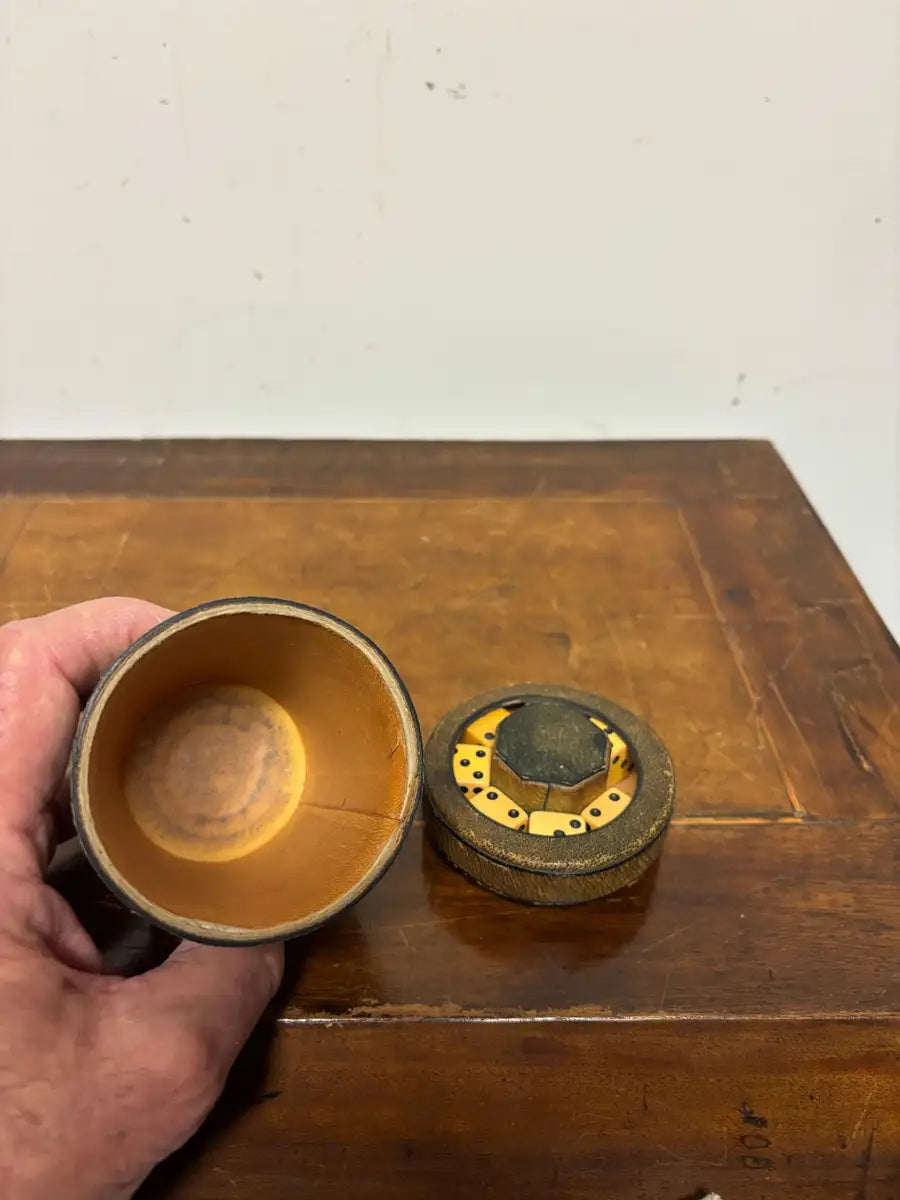
Early 20th Century Leather Dice Cup with 7 Dice Inset into the Top
$570.00
Call For Location | 203-325-8070
John J. Gredler Works of Art
Early 20th Century Leather Dice Cup with 7 Dice Inset into the Top
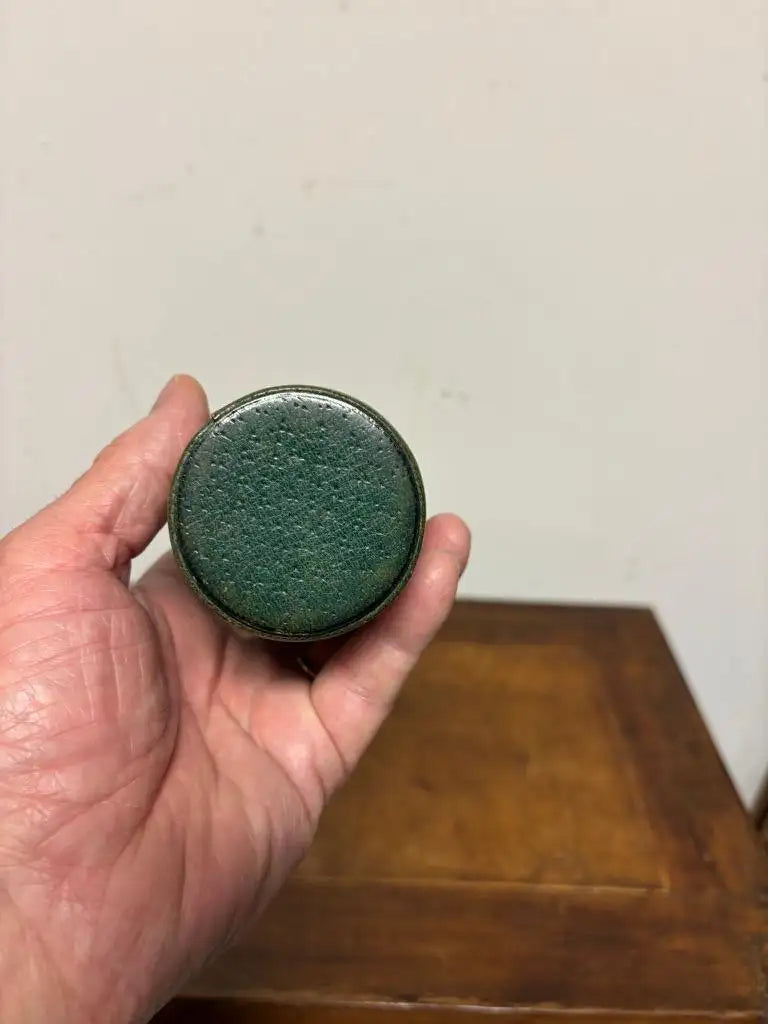
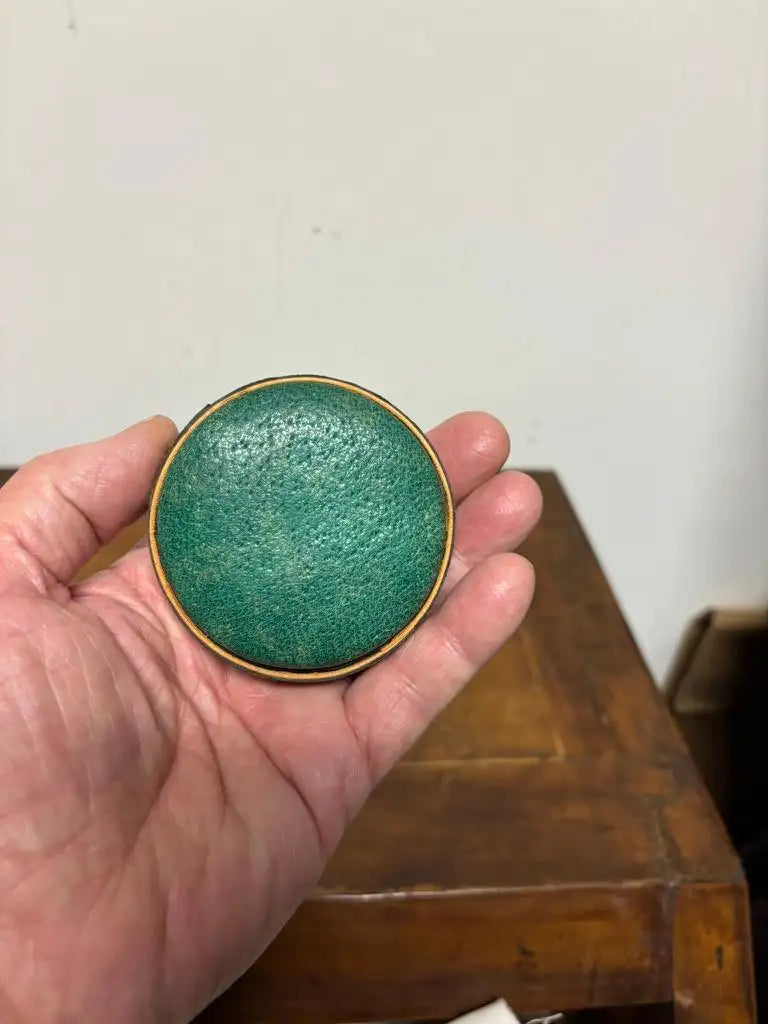
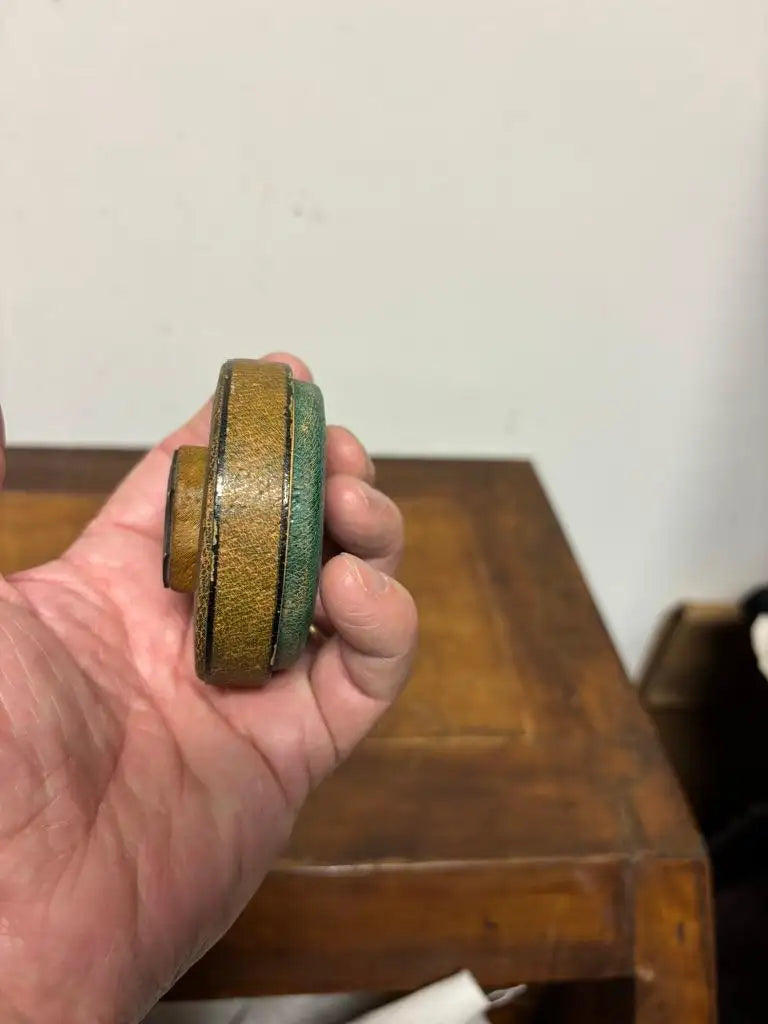
Antique leather dice cup with 7 dice inset into the top, an oval floral design in front, early 20th century. European, likely German. The leather faded from age and use except on the bottom and the inside of the lid, where the green coloring remains vibrant. The seven die possibly bakelite, it's hard to say with out pulling one out. An unusual and compelling form, a great collectors item.
Wear consistent with age and use. Minor fading. Wear and fading due from use giving this cup a nice patina of age.
4.25 inches high 3 inch diameter
Dice have been used since before recorded history, and their origin is uncertain. It is hypothesized that dice developed from the practice of fortune-telling with the talus of hoofed animals, colloquially known as knucklebones. The Ancient Egyptian game of senet (played before 3000 BCE and up to the 2nd century CE) was played with flat two-sided throwsticks which indicated the number of squares a player could move, and thus functioned as a form of dice. Possibly the oldest known dice were excavated as part of a backgammon-like game set estimated to be from between 2800 and 2500 BCE. Bone dice from Skara Brae, Scotland have been dated to 3100–2400 BCE. Excavations from graves at Mohenjo-daro, an Indus Valley civilization settlement, unearthed terracotta dice dating to 2500–1900 BCE, including at least one die whose opposite sides all add up to seven, as in modern dice. (Wiki)


