

Fontainebleau Fine Art
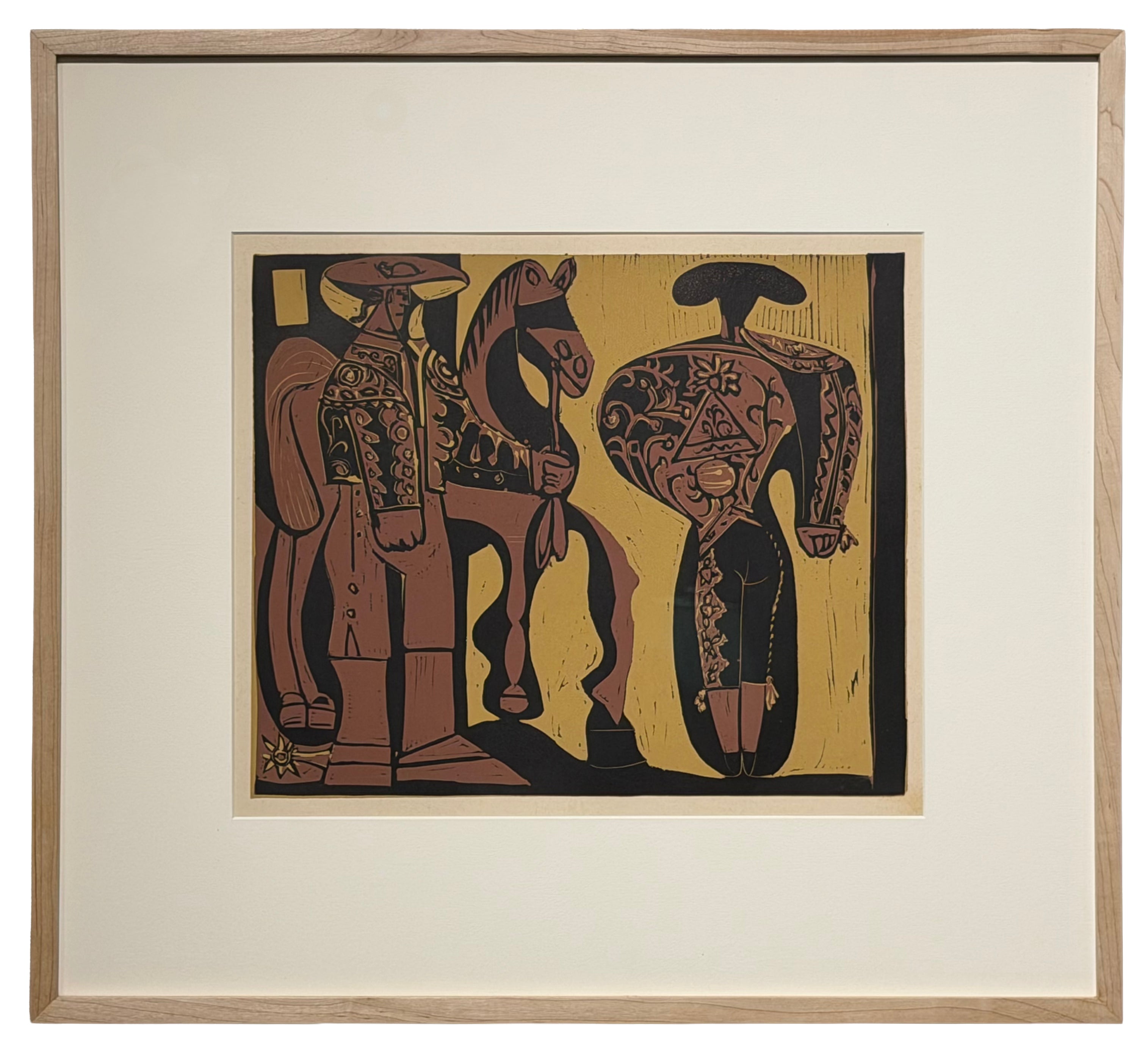
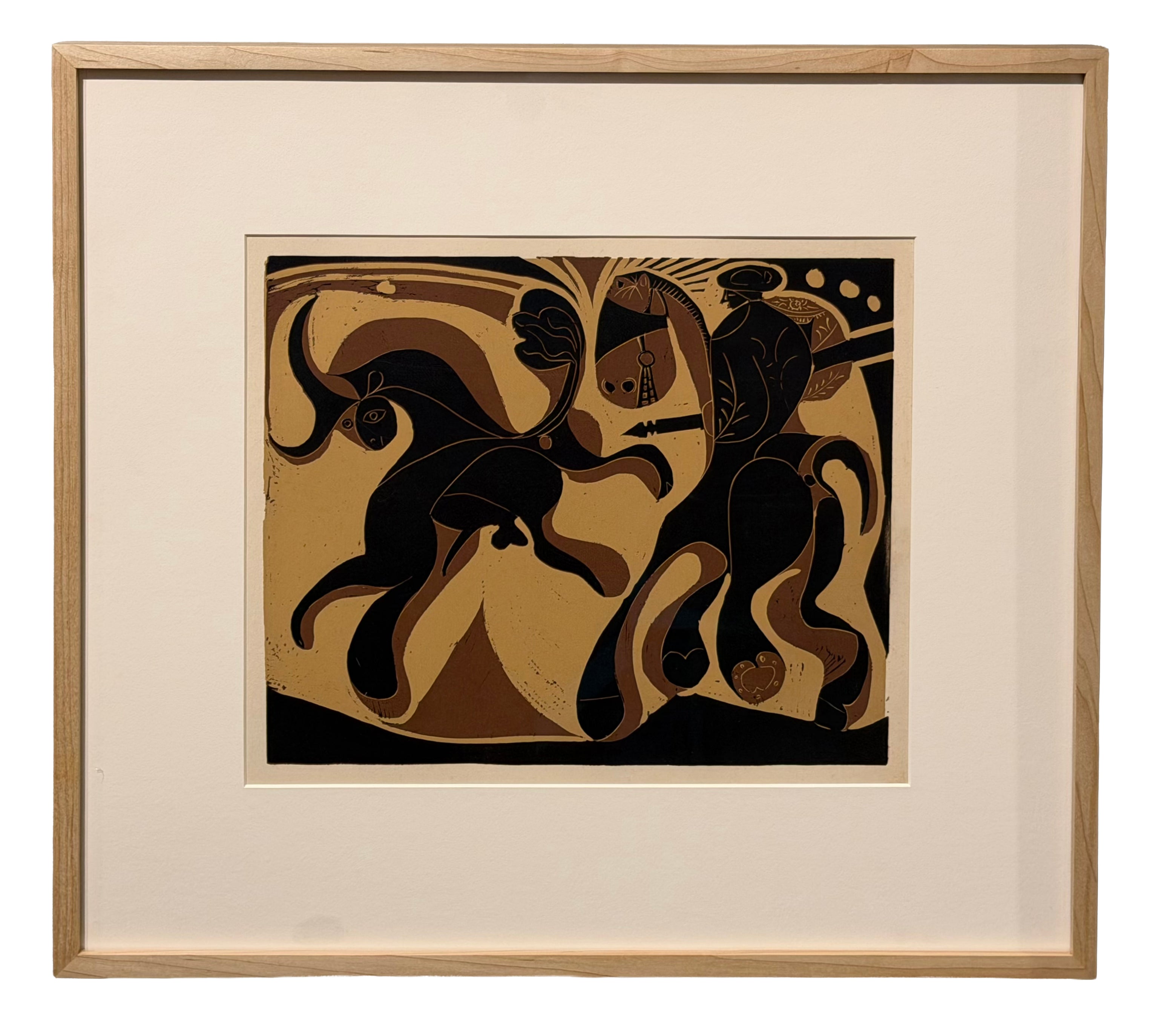
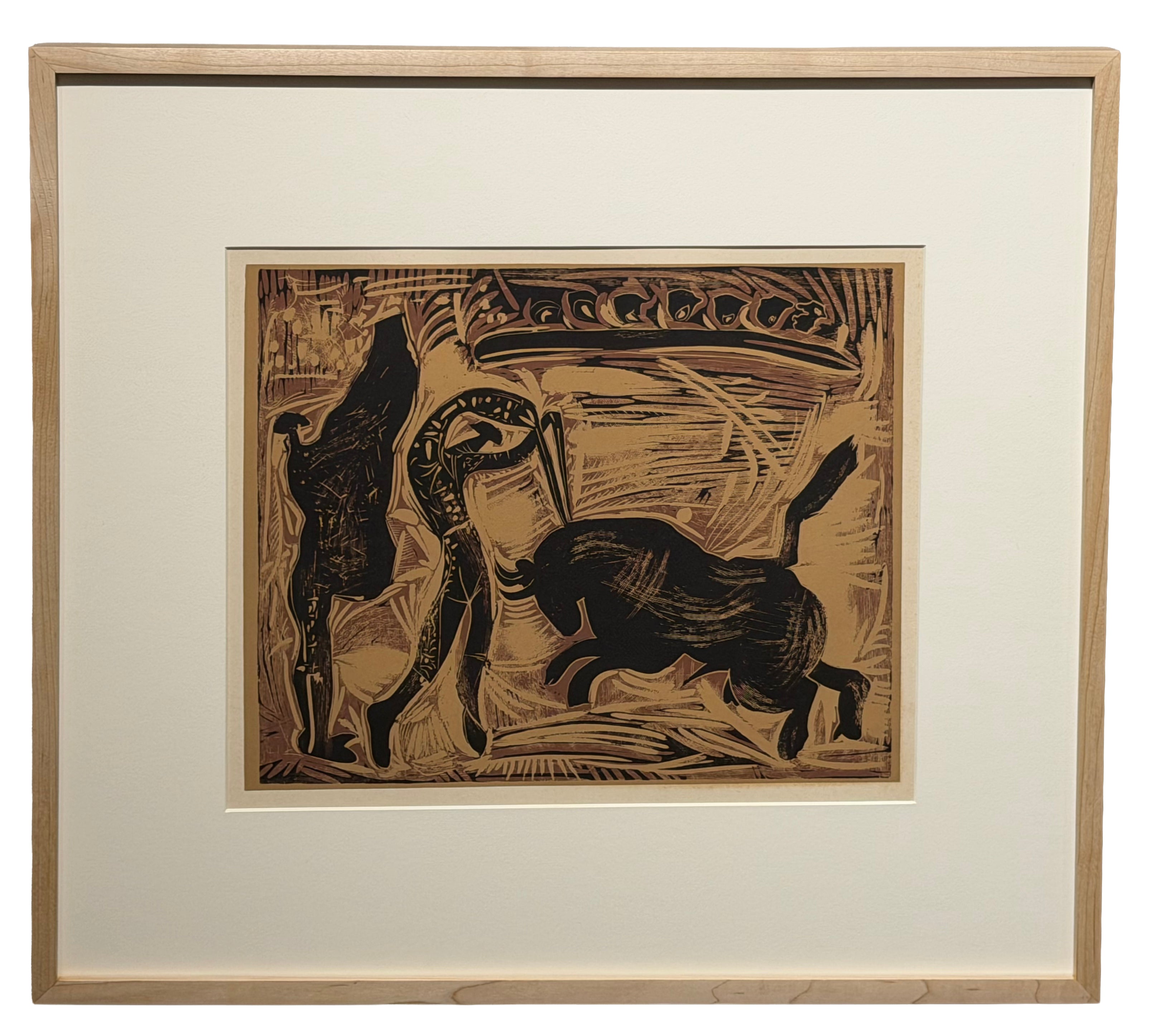
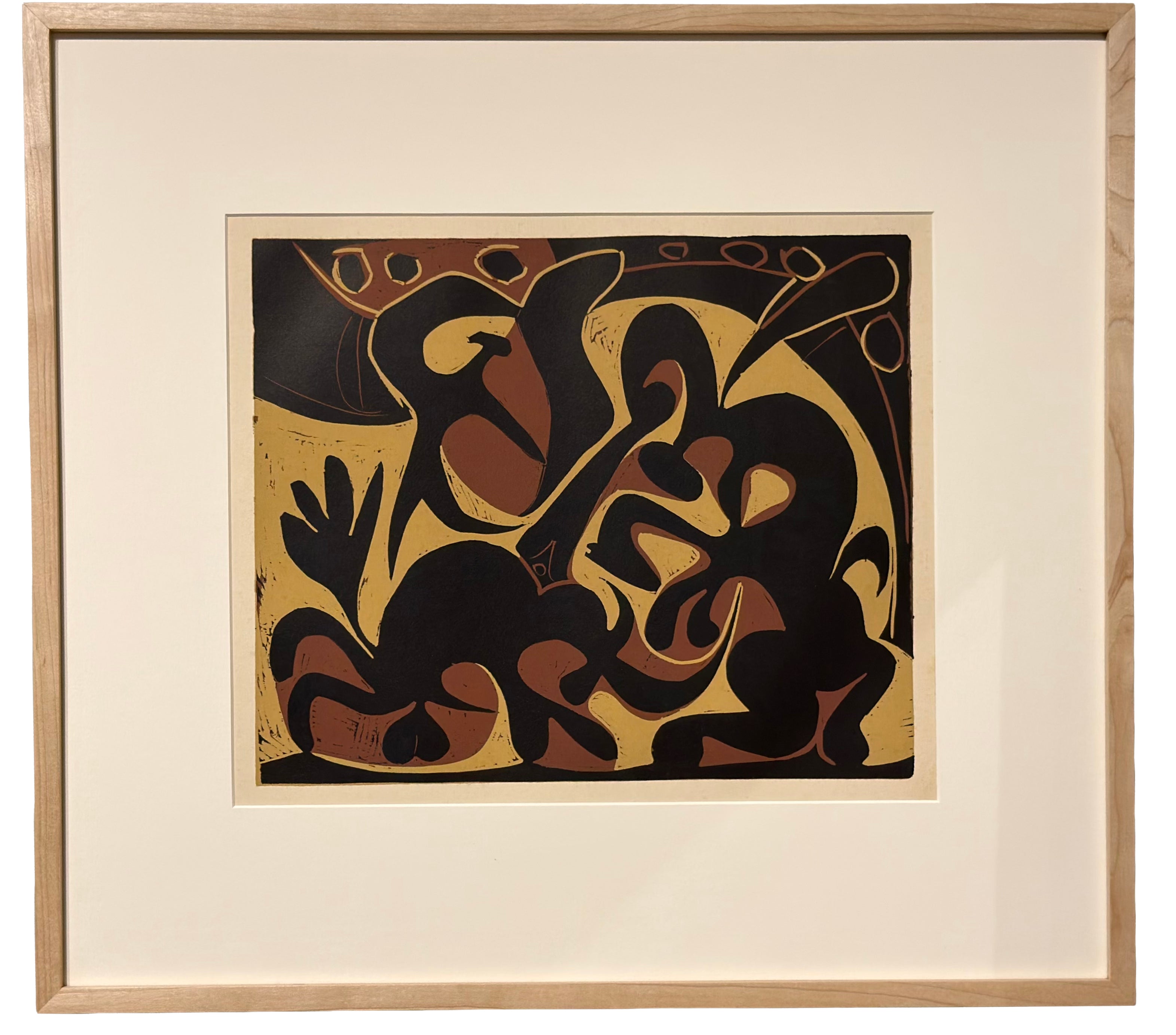
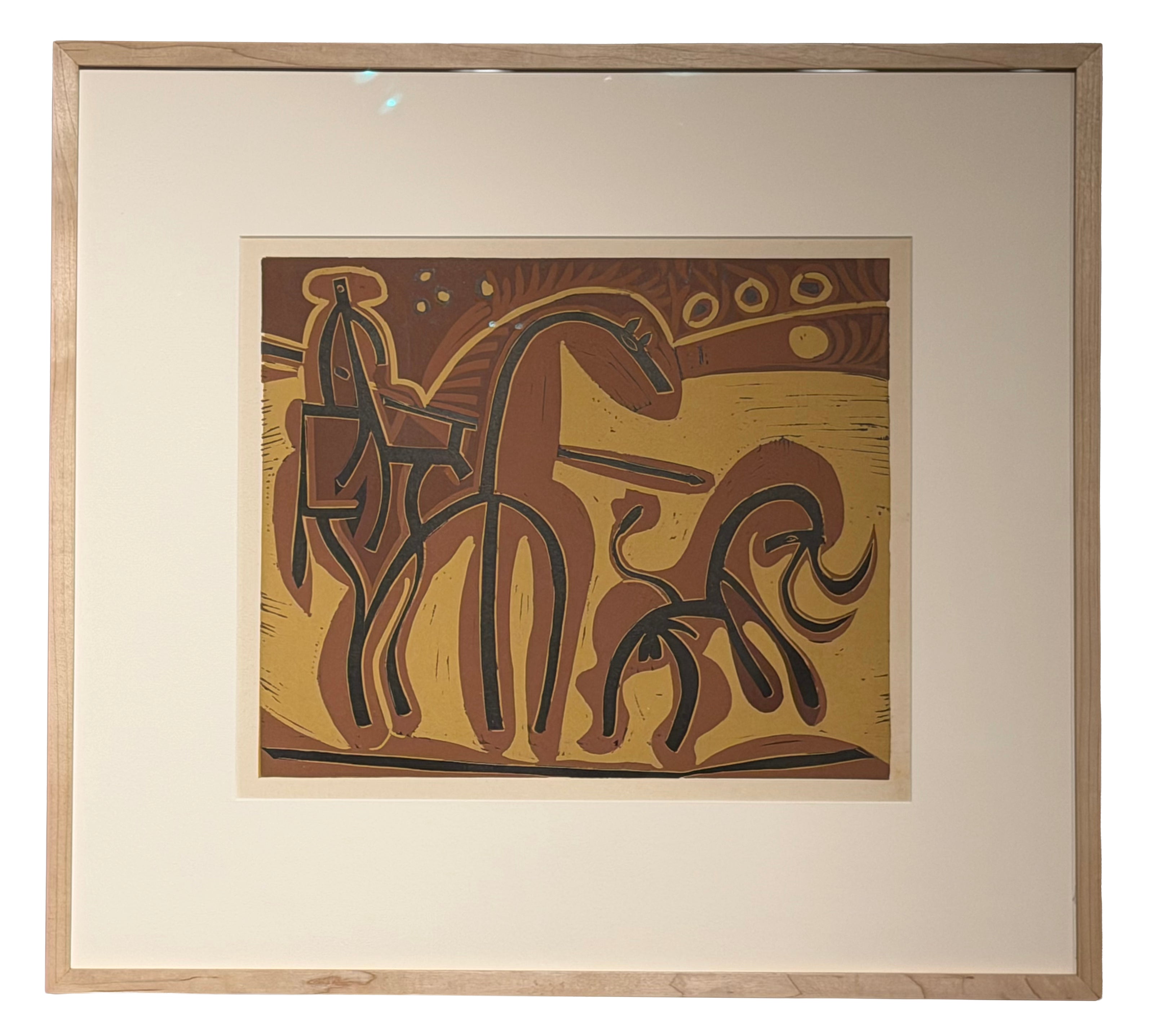
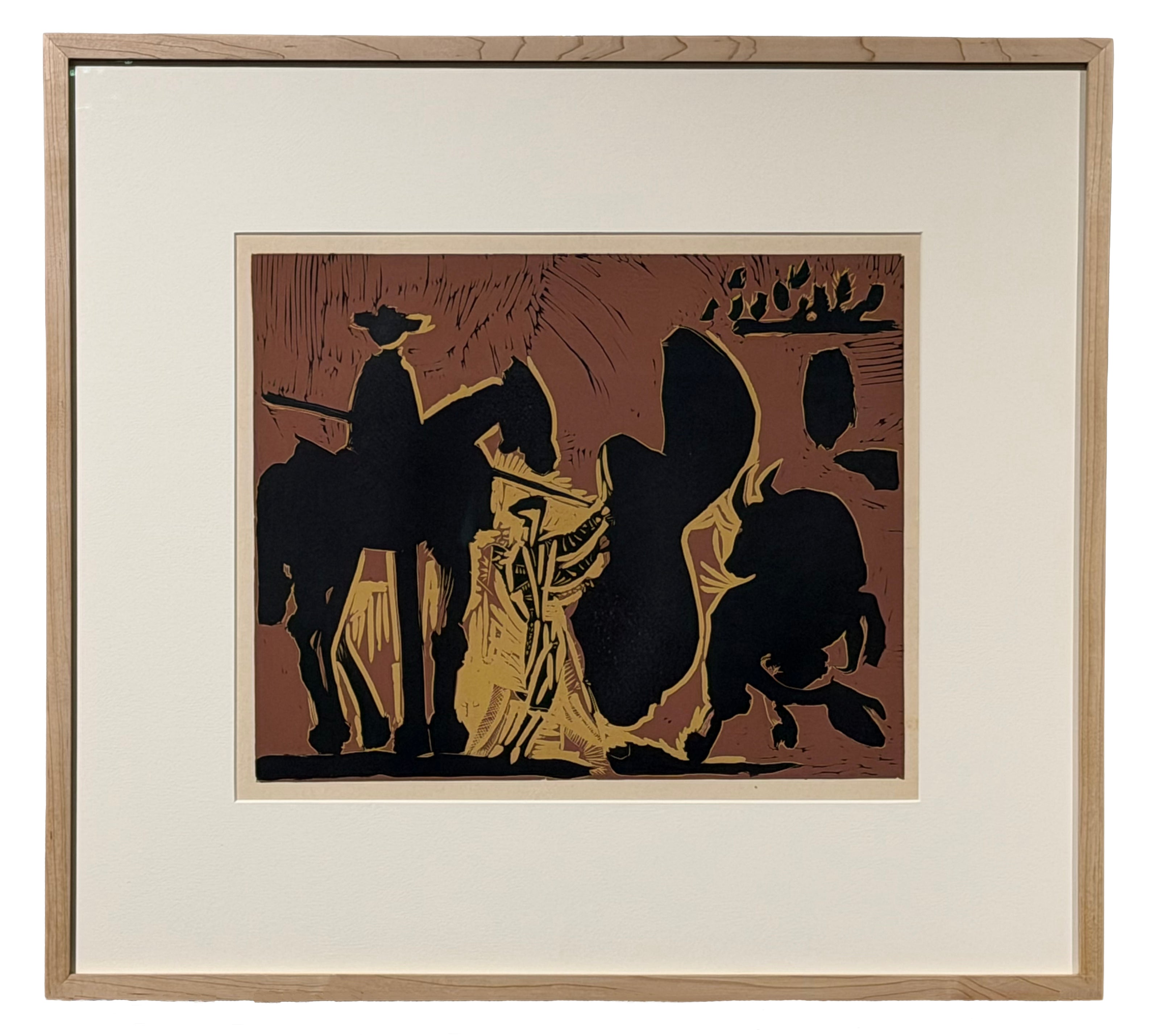
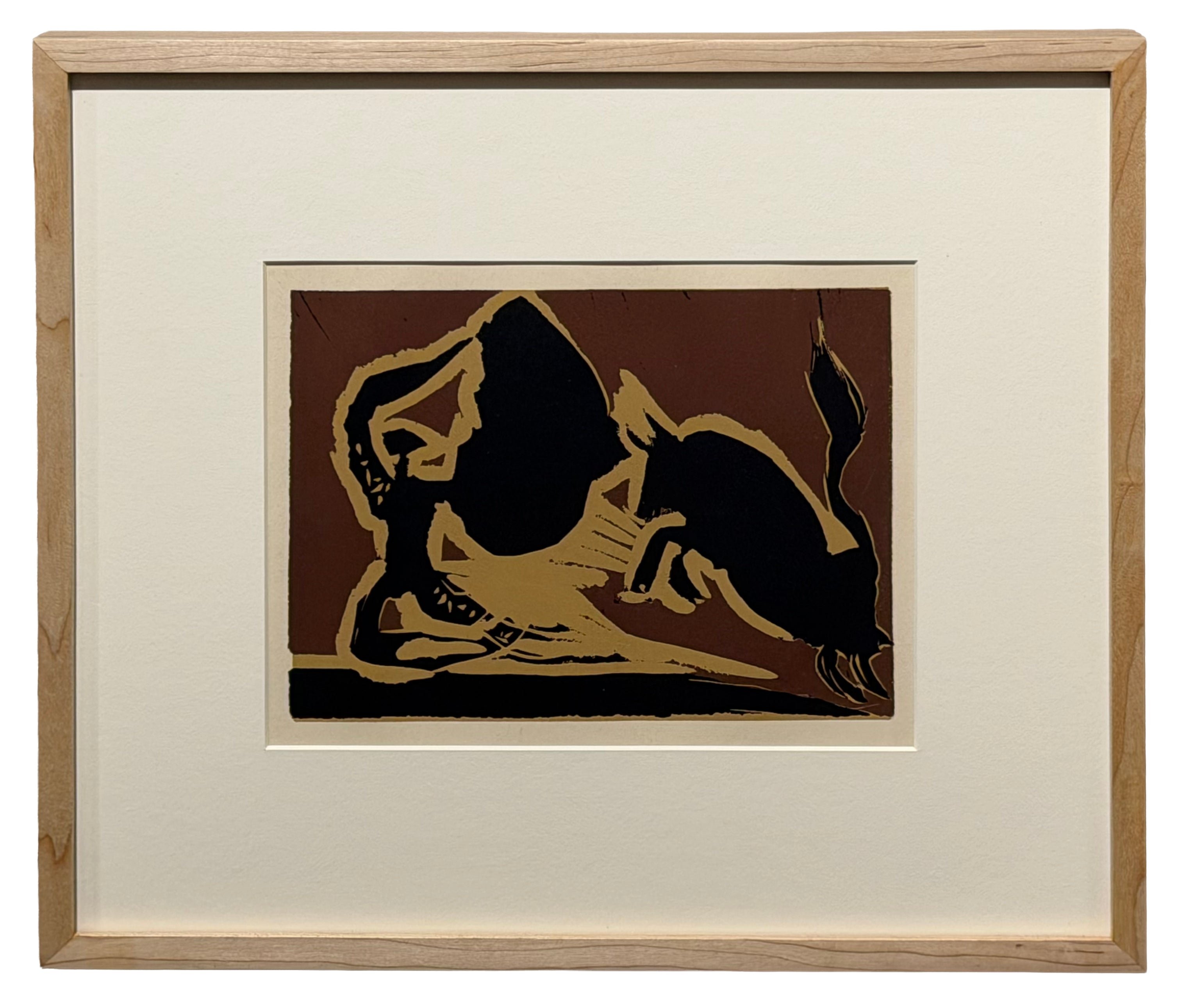
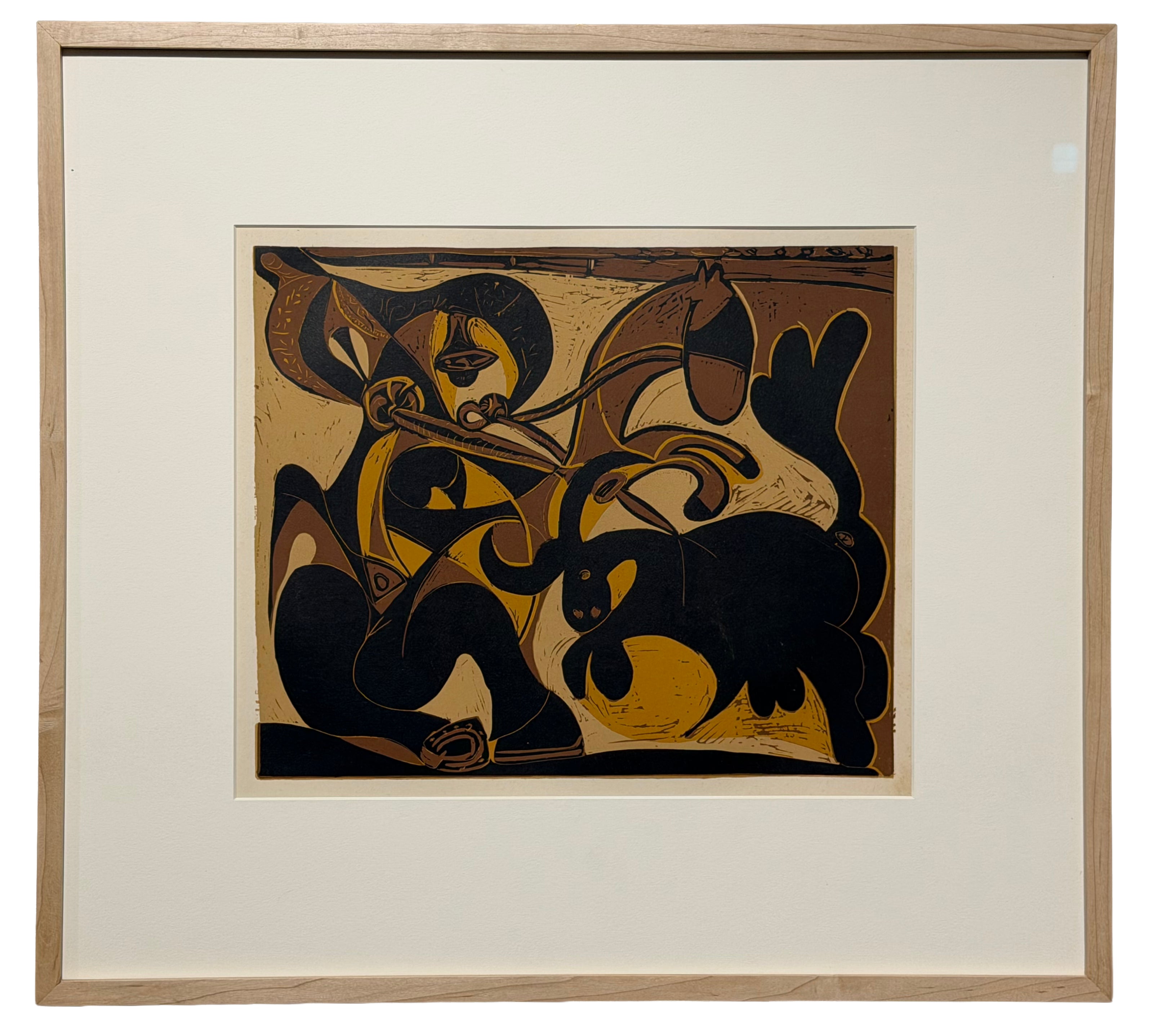
A Group of Picasso Lithographs, Sold Individually
$0.00
Call For Location | 203-325-8070
Fontainebleau Fine Art
A Group of Picasso Lithographs, Sold Individually
PICASSO, Pablo
(Spanish, 1881-1973)
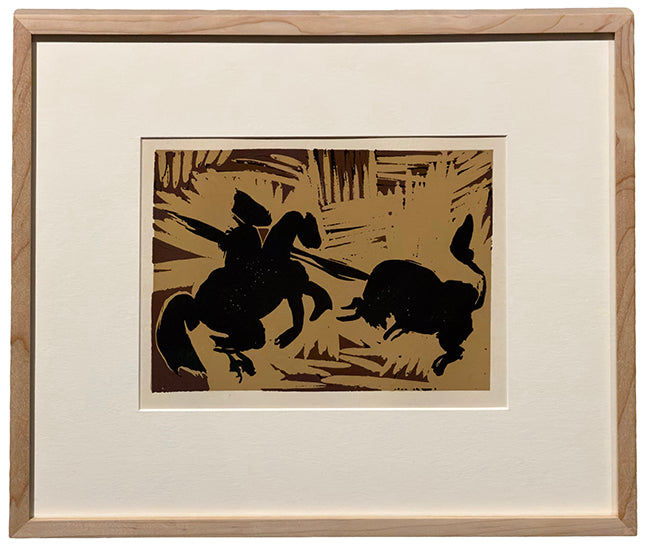
A series of lithographs on wove beige paper made after Picasso’s original linocuts (linoleum cuts) – 1962
Excellent condition and color retention, no toning, no molding, very limited foxing consistent with the material used and age.
From the portfolio: Pablo Picasso, Linoleum Cuts, Bacchanals, Women, Bulls and Bullfighters
Publisher: Harry N. Abrams, Inc., New York
First American edition printed in 1962 in West Germany in collaboration with publisher Verlag Gerd Hatje, Stuttgart. Introduction by Wilhelm Boeck
Sheet size: 12 ½ x 15 ¼ in (31,7 x 38,5 cm)
Image size: smaller lithographs 6 ½ x 8 ¾ in (16,5 x 22,5 cm) / larger lithographs 10 ⅝ x 13 in (27 x 33 cm)
With frame: smaller lithographs 14 x 16 ¼ in (35,5 x 41 cm) / larger lithographs 19 ¼ x 21 ¼ in (49 x 54 cm)
Custom-made, hand-crafted, solid maple wooden frame, museum archival quality French mat mounting and UV proof glass.
Picasso created many linoleum cuts (or linocuts) between 1958 and 1961. The original Picasso linocuts were hand-signed and sold by Galerie Louise Leiris, Paris, in an edition size of 50.
In 1962, Picasso consented to a high-end edition of reduced-size replicas (42% of the original size), which were printed in West Germany and published in America (by Harry N Abrams) and France (by Editions Cercle D’Art) using the finest processes and materials.
The original linocuts were on loan from the Galerie Louise Leiris to allow for the most accurate reproduction process.
This 1962 edition has become quite scarce as collectors appreciate the quality of printing having more of the look and feel of actual linocuts and being much superior to the 1988 edition which followed.
At the age of 78, still looking for new means of expression, Picasso took the linocut and for the first time made it a major vehicle for his art.
Linocut is a relatively simple printing technique. A thin sheet of linoleum is affixed to a wooden block, and the artist carves out a design using sharp tools of varying shapes and thicknesses. The block is then inked and the print is made.
Unlike wood in woodcuts, linoleum is inexpensive and more pliable, meaning it takes much less effort to carve. The soft material also allows for multiple methods of carving and holds up well for delicate details.
Continually pushing the expressive and technical possibilities of each medium he investigated, here Picasso exploited the linocut’s potential for rich colors, created by layers of oily ink, and decorative abstraction of form.
Picasso created the first print reproduced in this publication using the traditional method of cutting a separate block for each color.
However, it was too time-consuming for the master who revolutionized the technique by printing all the colors from one block in a process known as the reductive linocut:
By successive steps he worked from the lightest color to the darkest, cutting away parts of the block after each color was printed. Thus, no more proofs can be pulled from Picasso's blocks.
While making the task of registration much simpler and reducing the amount of errors created by carving multiple blocks inexactly, it required a tremendous power of imagination to foresee how each change in the block would impact on the composition as a whole.
It was precisely the kind of artistic experiment which Picasso enjoyed and he embraced the challenge wholeheartedly and playfully. He controlled the medium to fit his artistic needs, and the resulting linocuts are magnificent.
In the 1950’s, the resurgence of bullfighting in the South of France, where Picasso was living, brought back to his mind fond and astonishingly accurate memories of bullfights he had seen growing up in Spain where he vowed not to return. They became the main theme of the linocuts he produced in the fall of 1959.
• Private Provenance:
Ex-libris Puerto Rican printmaker and artist Lorenzo Homar (1913-2004)


