

The Antiquarian at Greenwich
A Large Oak Sideboard Attributed to Charles Dudouyt.
$16,900.00
Call For Location | 203-325-8070






The Antiquarian at Greenwich
A Large Oak Sideboard Attributed to Charles Dudouyt.
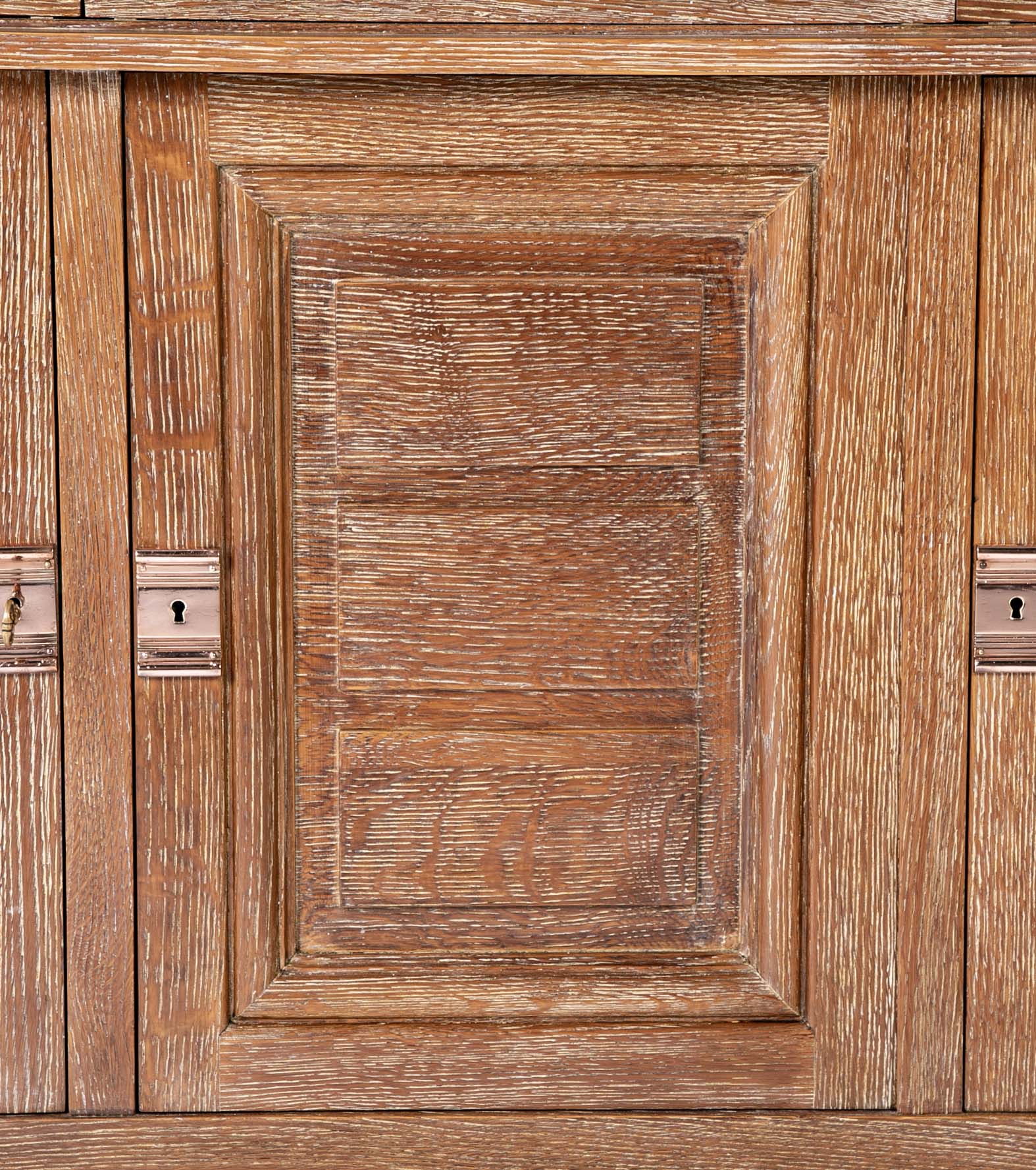
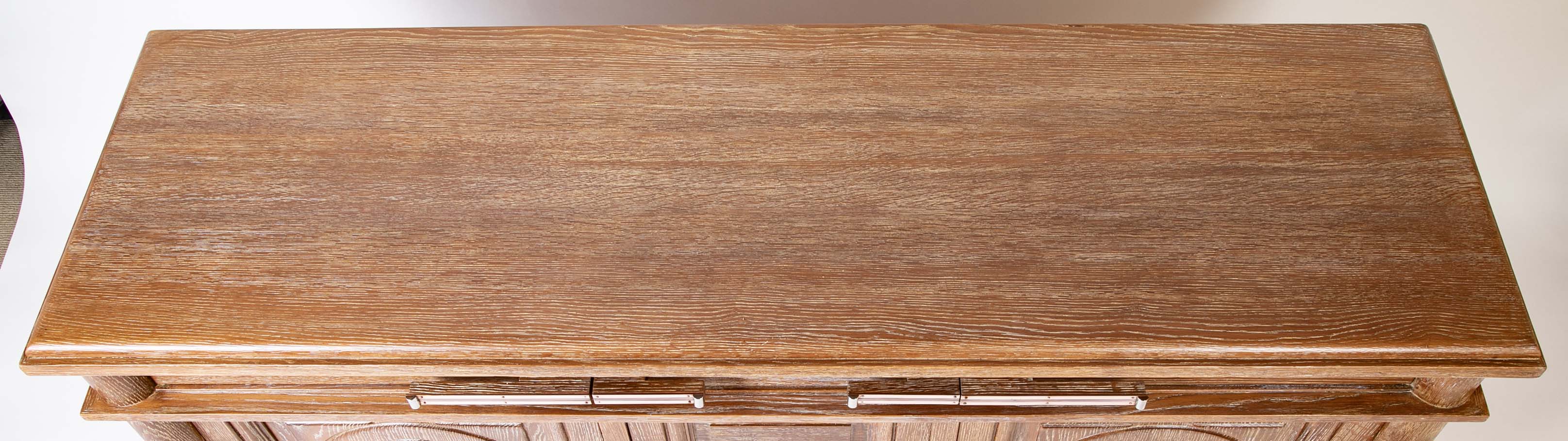
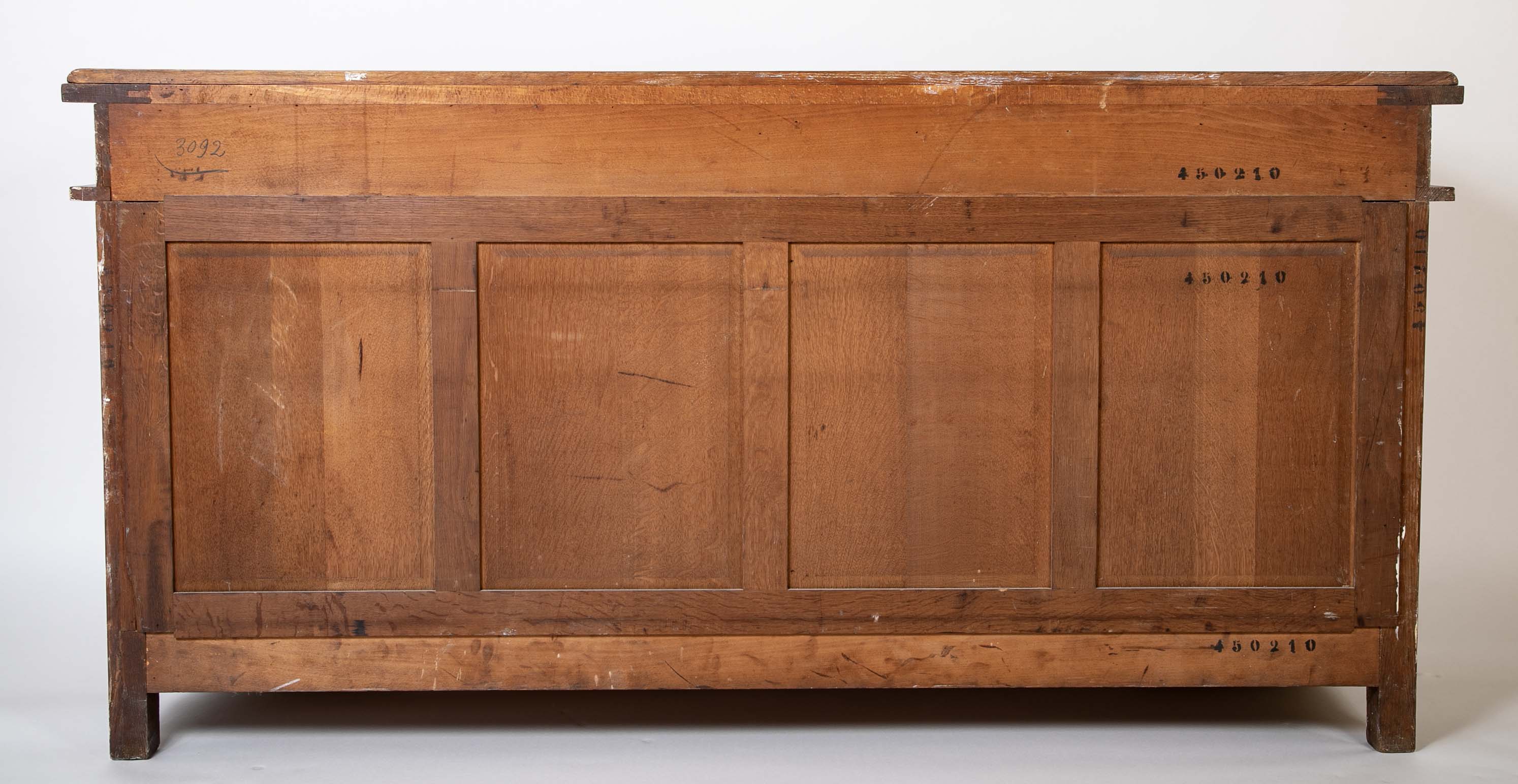
A Cerused oak and Nickel plated copper sideboard attributed to Charles Dudouyt. The credenza doors with geometric designs in a style made famous by Dudouyt. Circa 1930's
Dimensions: H: 39 1/2 x W: 78 1/2 x D: 23 1/2
About Charles Dudouyt
- Charles Dudouyt was a French painter, illustrator, and furniture designer whose carved oak pieces are now among the most sought-after examples of rustic-modernist Art Deco. Born in 1885, he trained at the École Germain Pilon in Paris and began his career as an illustrator, producing work for the publisher Calmann-Lévy and the satirical weekly L’Assiette au Beurre. He served in the First World War — one London dealer describes him as a survivor of Ypres — and on returning home in 1918 he abandoned painting and illustration for interior design. Working first with his wife on lighting fixtures and decorative objects, he founded a rustic furniture workshop called L’Abeillée at Pontoise, northwest of Paris, in 1920, and over the following decade expanded into larger-scale case pieces and seating.
In 1933 Dudouyt moved his operation to Paris, establishing La Gentilhommière, a combined showroom and workshop that produced tables, chairs, armchairs, cabinets, sideboards, and desks through the 1930s and 1940s. His signature idiom paired heavy, almost architectural proportions in solid oak, ash, or beech with surface enrichment — hand-carved raised motifs, geometric inlay, and turned or “corkscrew” supports — while seats and backs were often woven in rush, rope, wicker, or leather. The result reads as both peasant-vernacular and resolutely modern, which is why his work is frequently grouped with contemporaries such as Jean-Charles Moreux and the “Brutalist” strain of French design. After Dudouyt’s death in 1946 his son Jacques ran La Gentilhommière until it closed in 1960. Pieces are typically unsigned or branded


