

The Antiquarian at Greenwich
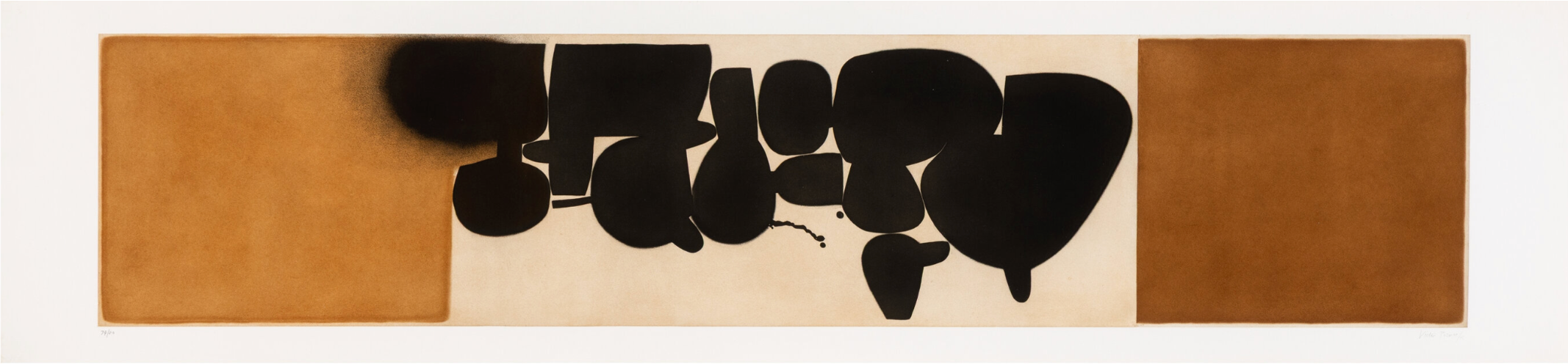
Victor Pasmore (1908-1998), Earth and Sky, 1976. Etching and aquatint in colors on wove paper
$22,400.00
Call For Location | 203-325-8070
The Antiquarian at Greenwich
Victor Pasmore (1908-1998), Earth and Sky, 1976. Etching and aquatint in colors on wove paper
Victor Pasmore (1908-1998), Earth and Sky, 1976. Etching and aquatint in colors on wove paper.
Sheet size 27-1/2 x 118 inches
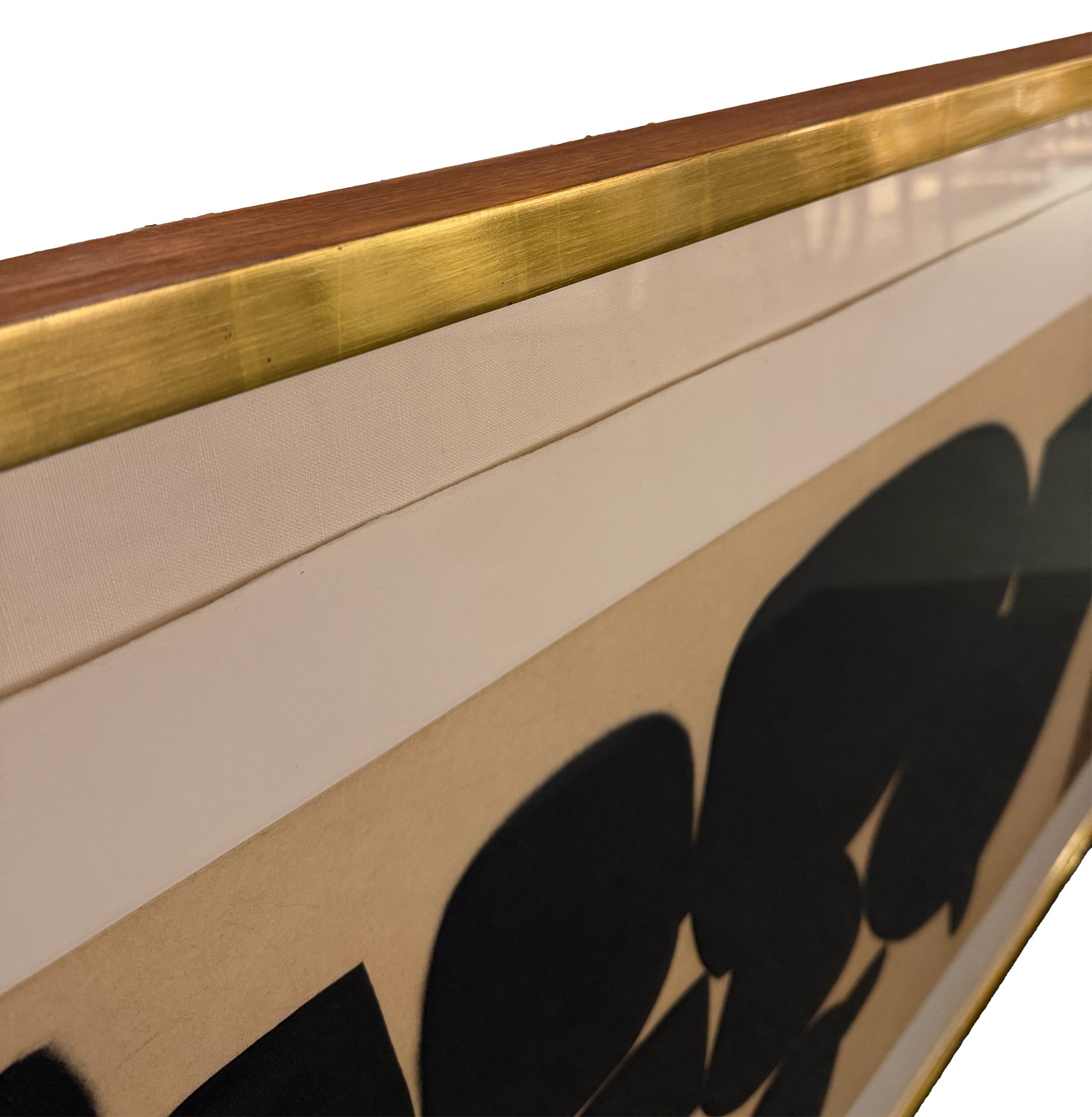
Dimensions: H: 33 3/4 x W: 124 1/4 x D: 2
Though he began his career making still lifes and landscapes, painter and printmaker Victor Passmore became a pioneer of early British abstractionwho went on to represent the country at the Venice Biennale in 1960 and the Bienal de São Paulo in 1965. Initially influenced by Paul Cézanne and Claude Monet, Pasmore first tried his hand at abstract painting in the 1930s —but it wasn’t until 1947 that his work fully shifted toward nonrepresentational imagery. In his earlier abstractions, he employed collaged elements and linear forms; by 1952 his paintings and prints had become geometric, constructivist compositions. Pasmore’s art continued to develop throughout his career, evolving to include soft-edged shapes and meandering lines as well as the blue and green hues and organic forms that characterize his later prints.


